
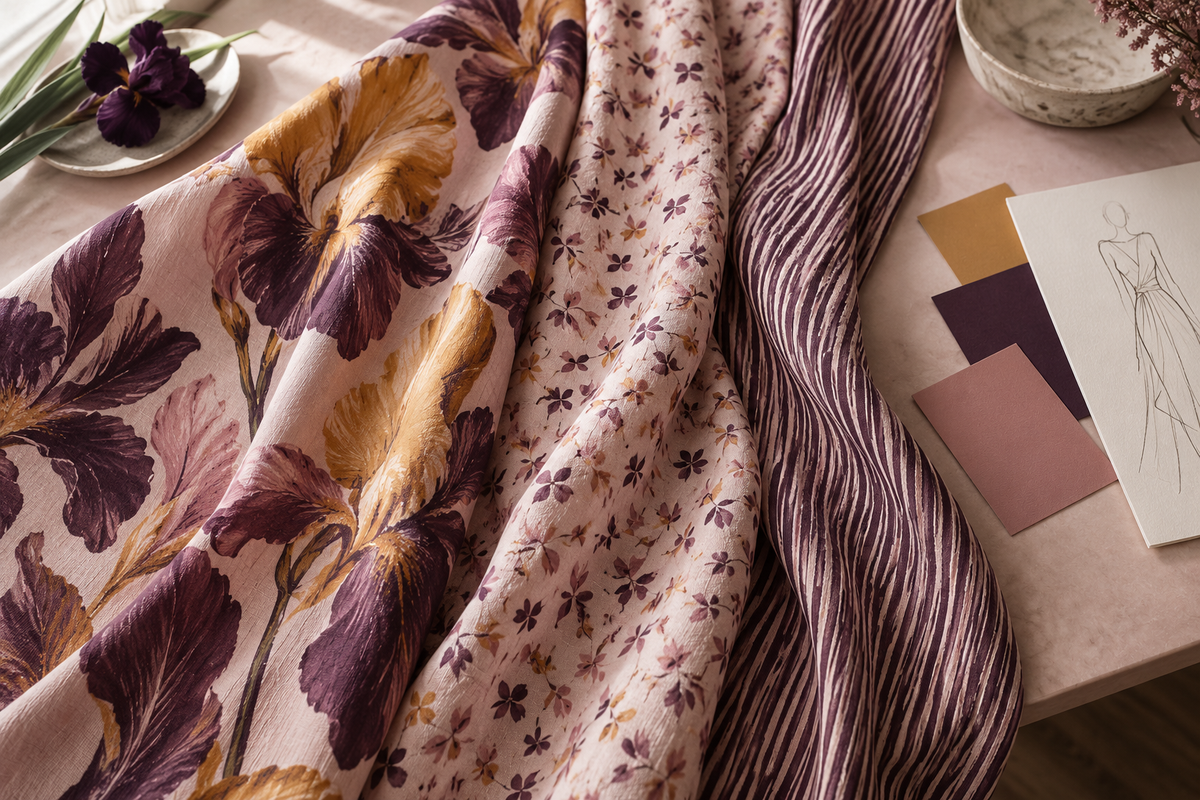
Give every variation its own name
A floral in dusty pink and the same floral in aubergine may belong to one collection, but they are two different choices. Give each a short, distinct reference. Use that reference on the artwork file, the preview and your project notes. A name such as Iris_Rose_v03 is easier to discuss than several files called final. The example is a naming suggestion, not a Niaash product reference.
Separate the design from its intended use
Make one line for each combination of artwork, colourway and fabric. Add the intended application beside it: a blouse, a dress or an accessory. If you are still comparing bases, mark the fabric as undecided rather than allowing a temporary choice to look final. Keep the requested metres in the same line so a quantity cannot accidentally be assigned to another version.
Keep a visual key beside the files
Place a small preview next to each reference. Use these images to identify the versions, not as approval of the final printed colour. An inspiration photograph, a digital preview and a physical textile sample serve different purposes. Label them clearly. If a particular colour relationship matters to your collection, discuss how it should be checked with Niaash before proceeding.
Record decisions instead of overwriting them
When you revise a design, increase the version number and record what changed: the background, a petal colour or the placement. Keep earlier files in a separate archive and identify the single version you want reviewed. Avoid sending two different attachments with the same filename. When replacing an earlier file, say explicitly which reference it replaces and ask for confirmation that the change has been received.
Use a short handover checklist
Before sharing the collection, check that every row contains a design reference, colourway, version, fabric choice or open question, intended print dimensions, metres and relevant notes. Add your delivery country and any required date to the overall brief. Distinguish questions awaiting an answer from choices you have already made. This is an organisational aid; it does not replace confirmation of artwork or production details.
Bring the notebook to your fabric conversation
Niaash’s swatch book costs 50 PLN plus courier delivery. It can help you compare materials; it is not a proof of your own artwork. Keep fabric-selection notes with the relevant design references, then share the combinations you would like to discuss. A clear notebook lets you focus the conversation on the decisions that are still open.